https://www.sciencedirect.com/science/article/pii/S0273230026001285?via%3Dihub
Abstract
The read-across approach is recognized as an acceptable methodology for addressing carcinogenic risk associated with N-nitrosamine drug substance-related impurities (NDSRIs) that are data-poor. This work presents a read-across case study that evaluates N-nitroso-ulifloxacin (an impurity lacking toxicological data), using N-nitroso-ciprofloxacin as a surrogate analogue. Comparative analysis of the similarity across the structural, physicochemical, metabolic, and toxicological domains demonstrates a high degree of structural similarity (both global and, most importantly, local), along with comparable physicochemical properties and potentially similar metabolic activation pathways. Both the target and the surrogate fall within the same category under the Carcinogenic Potency Categorization Approach (CPCA). Computational toxicology analysis supports the conclusion that no additional toxicological concerns are identified for the target N-nitrosamine with respect to its analogue, and that the negative in vivo mutagenicity data available for the analogue can be used to gain insights on the carcinogenic potential of the target. Accordingly, N-nitroso-ulifloxacin can be considered a non-mutagenic impurity (NMI) subject to control under ICH Q3B. This case study illustrates how read-across can provide a scientifically justified and regulatory-relevant strategy for establishing acceptable intake limits for data-poor NDSRIs.
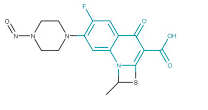
N-nitroso-ulifloxacin
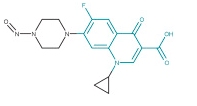
N-nitroso-ciprofloxacin