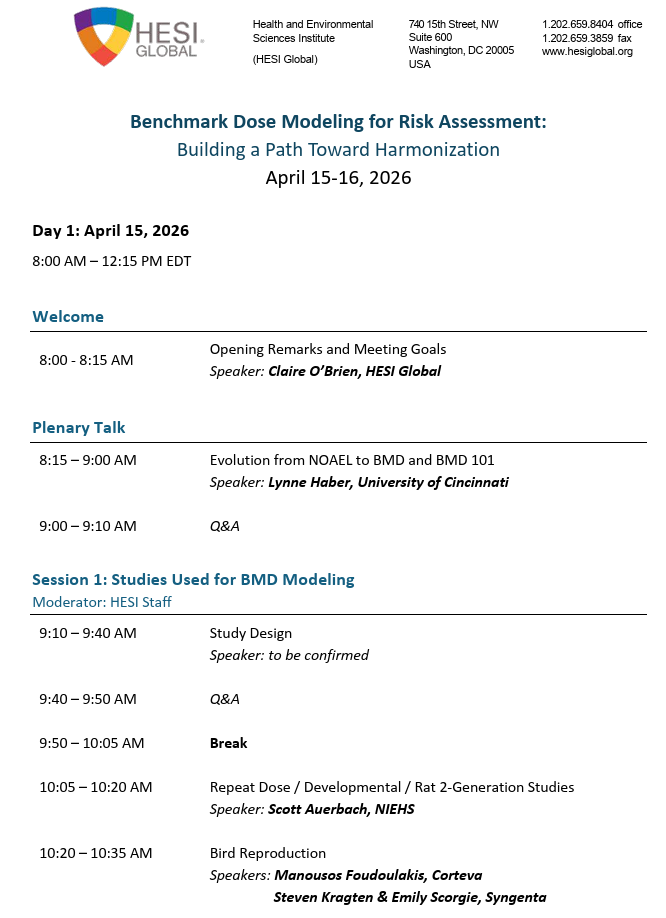
HESI Global is hosting a two-day Benchmark Dose (BMD) Modeling for Risk Assessment webinar.
April 15–16, 2026 | Zoom | Free and open to all
Register: https://hesiglobal.org/event/bmd-2026-webinar/
Hear global experts from regulators, academia, and industry on:
- Core BMD principles
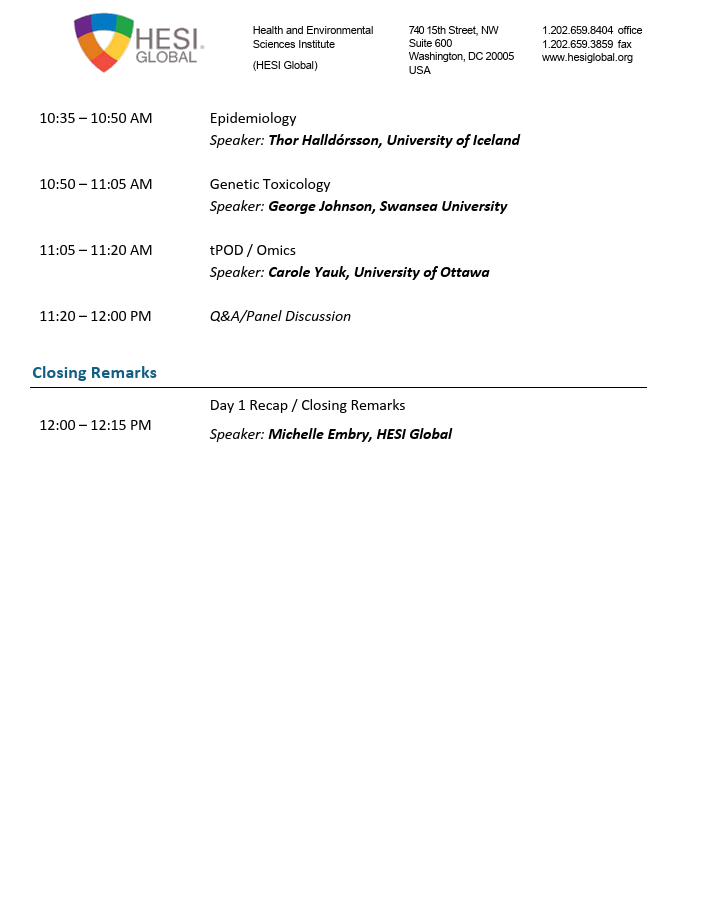
- Applications across toxicology, epidemiology, ecotox, and omics
- Common challenges and a path toward harmonization
4 Likes
Hey Nitrosamine Exchange Community!
@Nitrosamines_Analyzer @Nitrosamines_Explorer @Nitrosamines_Investigator @Nitrosamines_Mitigator
With all the ongoing regulatory evolution taking place—especially the updates surrounding ICH M7—understanding how we deploy robust nitrosamine risk assessments is more critical than ever. A major shift happening in the math behind our safety limits, and it is something we all need to have on our radar: Benchmark Dose (BMD) Modeling.
What is BMD and why is it better? For years, the industry standard has been the NOAEL (No-Observed-Adverse-Effect Level) approach, which essentially looks for the highest tested dose that didn’t show a negative effect. BMD is a massive step forward because it uses the entire dose-response curve, rather than being constrained only to the specific doses tested. Simply put: it uses all of our data to draw a complete, highly precise picture of safety, properly reflecting sample sizes and natural variability.
Why does this matter for Nitrosamines? If you cannot establish Acceptable Intakes (AIs) because you don’t have 2-year animal carcinogenicity data, BMD is the key. During the recent HESI Global Webinar, exciting data was presented showing that BMD modeling can be used on short-term (28-day) mutation assays to accurately predict the long-term cancer potency (TD50) of nitrosamines. In fact, the short-term results correlated remarkably well with the 2-year TD50 data! This proves that BMD is a highly valid surrogate for estimating nitrosamine potency and setting protective limits without needing 2-year animal studies.
As regulatory agencies continue to shift toward these advanced statistical models, we need to be prepared.
Last April hosted a fastastic 2-day workshop on BMD. If you want to get up to speed, I highly recommend watching the recordings on HESI’s youtube channel. Day 1 lays down the easy-to-understand foundations, and Day 2 dives into regulatory guidance and real-world case studies.
Day 1: https://www.youtube.com/watch?v=ADuYHodnvBs
Day 2: https://www.youtube.com/watch?v=d9g698UMm90
10 Likes