We have to answer to autorithies about the ondansetron impurity H potential reaction with nitrites. The reaction should take place in the nitrogen of the carbazole function. My point of view was that it’s not possible as no hydrogen is available on the alpha carbon.
But when we have searched on different supplier sites to buy the N-Nitroso ondansetron impurity H, some of them could synthetized it, others are not abble as the synthesis was unsucceful.
Could you help me on this molecule ? Can I justify that we have no risk with this impurity as the nitrogen function in a carbazole site can not be considered as an amine ?
I would be cautious with suppliers — some claim they have synthesized it, but in reality they haven’t. So I would only trust them if they provide solid evidence.
Regarding your question: I think there might be some confusion. The presence of an α-hydrogen is relevant when considering the acceptable intake with the CPCA approach. But for the standard nitrosamine reaction, what really matters is having a secondary amine — which, in this case, is present. That’s why the formation of a nitrosamine is definitely possible.
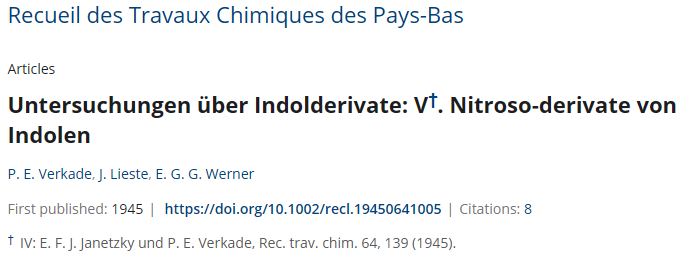
The formation of N-Nitrosamines of a carbazole (or an indole) is not easy. I suggest you evaluate the risk of formation by performing the nitrosation experiments recommended by EFPIA and IQ - https://doi.org/10.1021/acs.oprd.3c00084
Moreover, as rightly highlighted by you, mutagenicity of such nitrosamines is not due to alpha-hydroxylation and therefore they are excluded from the cohort-of-concern. Nevertheless, for confirmatory testing, you should consider the default TTC limit of 1500 ng/day.
A NAP test will help to confirm or rule out the probability of formation of the corresponding NA. In any case, the Appendix 1 of the EMA Q&A document include a number nitrosamines with N-nitroso diphenylamine like structures. The AI for these NAs is 78000 ng/day based on toxicological data of N-nitroso diphenylamine, that you can use for a QSAR justification.
Nitroso Impurity H is definitely NOT a nitrosamine but some other nitroso impurity if at all chemically possible in terms of its formation.
Impurity H bears a nitrogen which is part of an aromatic system and not a secondary amine it also lacks alpha hydrogens and will not follow the known metabolic CYP activation pathway
CPCA does not apply here and the only option is to first try to synthesize it and if it forms to look for read across data.