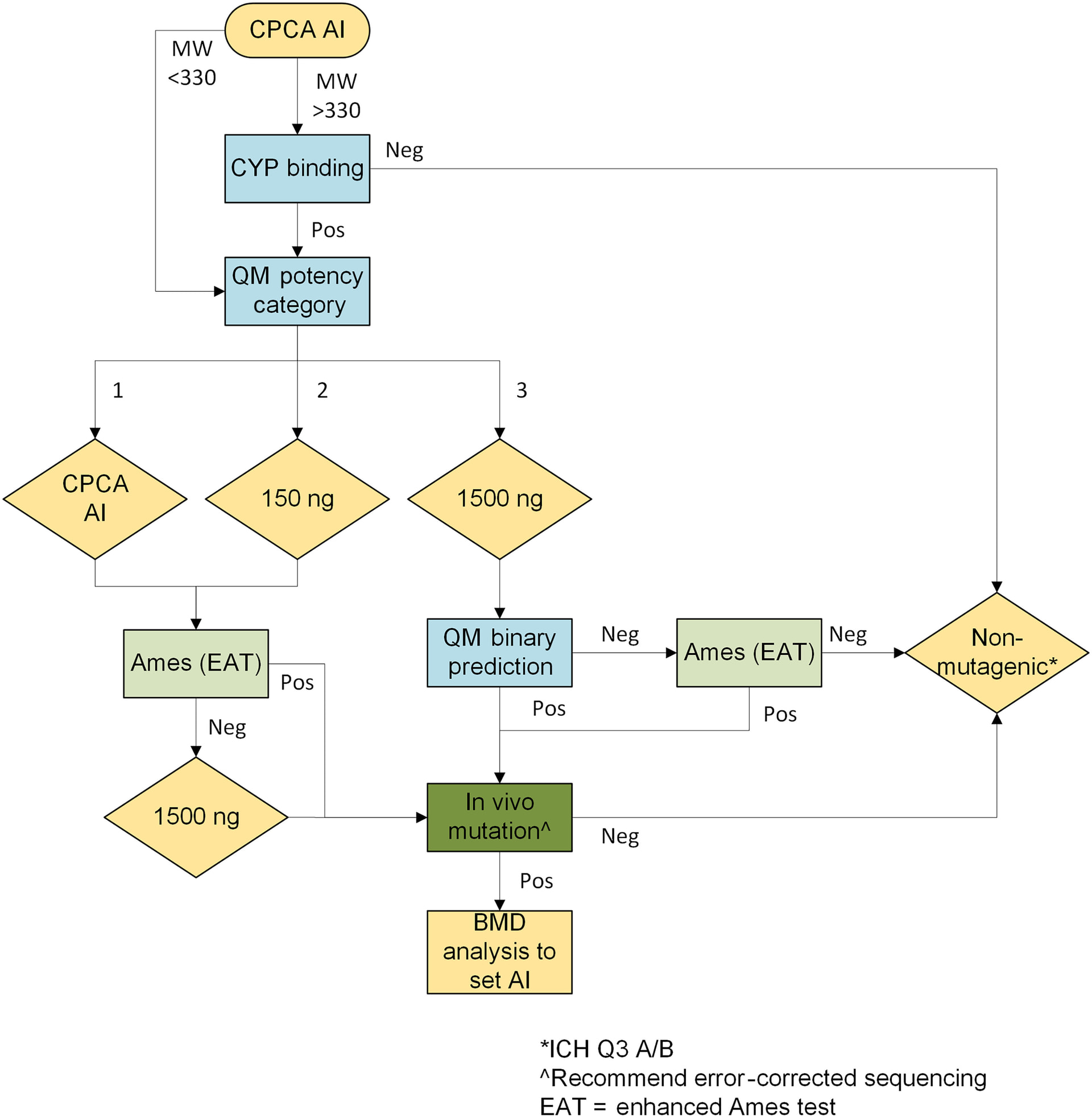
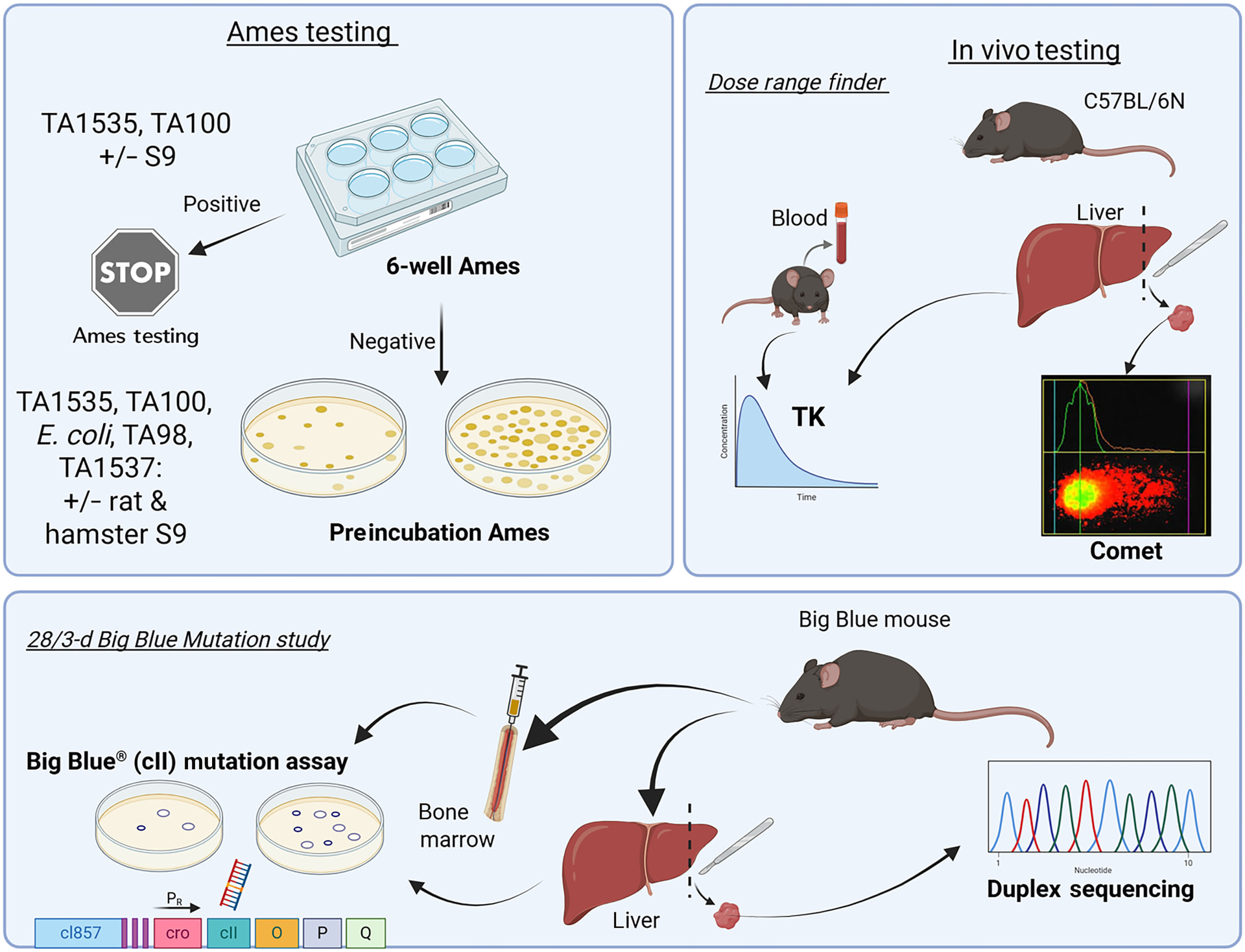
New article from Pfizer colleagues Sun et al., 2026. Important paper publishing Ames, in vivo comet / big blue / duplex sequencing data with 3 small molecule nitrosamines and 22 NDRSIs. Also included was in silico methodology using quantum mechanical modeling and cyp 450 binding analysis. After reading the paper, my opinion is that this is a huge data set that should be informative on safety data moving forward. It shows that the Ames is highly predictive of in vivo mutagenicity, and that NDSRIs are of lower in vivo mutagenic potency than small molecule nitrosamines.
Generating data like this really moves the conversation forward and hopefully will allow us to use more safety data to revise acceptable limits for NDSRIs.
https://www.science.org/doi/10.1126/sciadv.aee8680
Abstract:
The detection of N-nitrosamines in pharmaceuticals has been a focus for industry and regulatory authorities since 2018. This has prompted extensive research into their mutagenic potential and mitigation strategies. We present a comprehensive evaluation of 25 structurally diverse N-nitrosamines using in vitro (Ames test), in vivo (liver comet, Big Blue transgenic mutation, and duplex sequencing), and in silico methods [quantum mechanical modeling and cytochrome P450 (CYP)–binding analysis]. Results show strong concordance across assays and reveal that complex active pharmaceutical ingredient (API)–derived or process-related impurity (PRI)–derived N-nitrosamines are often not mutagenic or have low mutagenic potency. Quantitative in vivo data enabled the derivation of compound-specific acceptable intakes (AIs), frequently exceeding regulatory limits based on an assessment of structural features. Duplex sequencing demonstrated superior sensitivity over traditional assays, and quantum mechanical models proved effective for potency prediction. A weight-of-evidence decision tree to derive AIs that integrates experimental and computational data is proposed, which reduces animal testing and supports drug product remediation efforts that are commensurate with risk
14 Likes
I’m very thankful that this data was allowed to be shared. More knowledge makes better decisions and data like this helps us all to influence regulators.
1 Like
indeed, excellent paper and very useful.
thanks a lot Joel!!
Good paper , proves something great nitrosamine scientists had mentioned eas early as 1960s and 1970s. But then some agencies were not ready to accept the outcome of the old studies simply because they were old, irrespective of the sound science.
2 Likes
Thanks @jbercu for sharing… @Nitrosamines_Analyzer @Nitrosamines_Explorer @Nitrosamines_Investigator @Nitrosamines_Mitigator
Source: https://www.science.org/doi/10.1126/sciadv.aee8680
Viralizing a New Paradigm: Time to Upgrade Our Nitrosamine Testing Toolkit 

Hi everyone,
An incredibly impactful study was just published by Sun et al. from Pfizer in Science Advances: “Complex versus simple N-nitrosamines: Comprehensive genotoxicity and in silico carcinogenicity assessment toward future testing paradigms”. This extensive dataset evaluating 25 structurally diverse N-nitrosamines provides a massive, data-driven leap forward in how we evaluate safety margins and establish acceptable intakes (AIs).
 The Core Highlights
-
Structural Complexity Reduces Risk: The study demonstrates that complex active pharmaceutical ingredient (API)-derived or process-related nitrosamines are frequently non-mutagenic or exhibit significantly lower mutagenic potency compared to simple small-molecule anchors.
-
Advanced Technology Brings Precision: By combining quantitative in vivo Benchmark Dose (BMD) modeling with ultra-sensitive Duplex Sequencing (DS), the team derived compound-specific AIs that frequently and safely exceed conservative regulatory default limits.
-
A Pragmatic Roadmap: The authors proposed a weight-of-evidence decision tree that integrates computational (QM) modeling, enzyme binding analysis, and tailored experimental data to establish realistic safety limits without defaulting to worst-case assumptions.
 A Reflection on Viralizing the Science
This paper isn’t just a robust dataset; it is a blueprint for the future of nitrosamine risk assessment. But having a blueprint isn’t enough—as an industry, we have to build the house.
To successfully move away from ultra-conservative default class limits, we need to actively champion and deeply understand these advanced models. We cannot wait for guidance to dictate the science; we need to “viralize” the adoption of this forward-thinking approach. That means getting our teams comfortable with the mechanics of Duplex Sequencing, trusting the predictive power of CADRE QM models, and standardizing how we apply BMD modeling in our daily workflows.
The faster we internalize, share, and validate these tools across our own networks, the faster we can collectively advocate for their integration into standard regulatory frameworks worldwide.
 Questions for the Community
On Deepening Industry Knowledge & Strategy:
-
How can we, as an industry, build confidence and deepen our collective expertise in computational (QM) and next-gen sequencing (DS) models to ensure they become standard practice?
-
What are the practical, day-to-day hurdles to implementing Pfizer’s proposed weight-of-evidence decision tree in your current quality and regulatory workflows?
-
How do we effectively communicate the validity and safety of these advanced methodologies to global regulators to accelerate their widespread acceptance?
-
What collaborative research or inter-laboratory studies need to take place next to further validate these models across a wider chemical space?
What are your main takeaways from this landmark paper? Let’s dive into how we can turn this research into everyday reality!
9 Likes
High-molecular-weight nitrosamines have lower bioavailability, which results in their reduced toxicological effect. This has been demonstrated in a number of scientific articles.
3 Likes
Excellent consolidation of the evidence base for complex NDSRIs. A pragmatic WoE workflow should start with CPCA alongside other tools.
Agencies should accept this comprehensive study for widening of limit or declared certain NA’s as NMI.
Thanks for sharing such as a paper