You don’t want to miss the upcoming FDA GDUFA Workshop…
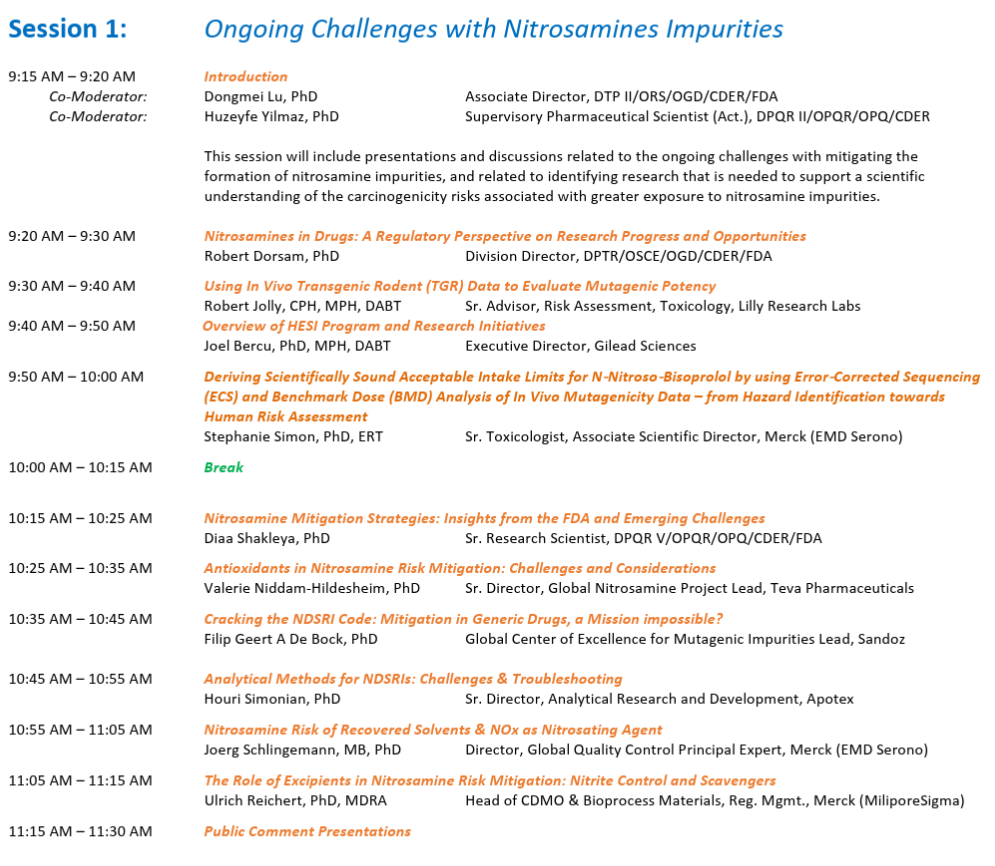
Fiscal Year 2026 Generic Drug Science and Research Initiatives Public Workshop
June 8 - 9, 2026
Topics discussed during the workshop will focus on research that is needed to address scientific knowledge gaps and associated challenges impacting the development and regulatory assessment of generic products, including complex generics. During the workshop, public input will also be sought on the prioritization of product-specific guidances (PSGs). The sessions of this year’s workshop will focus on identifying what research is needed related to:
Leveraging Generic Drug Industry Expertise & Insights for GDUFA Research & PSG Prioritization
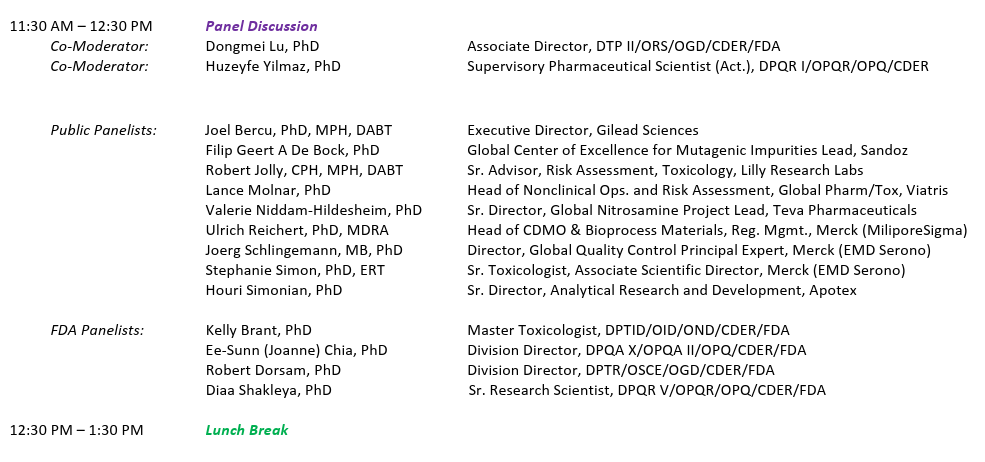
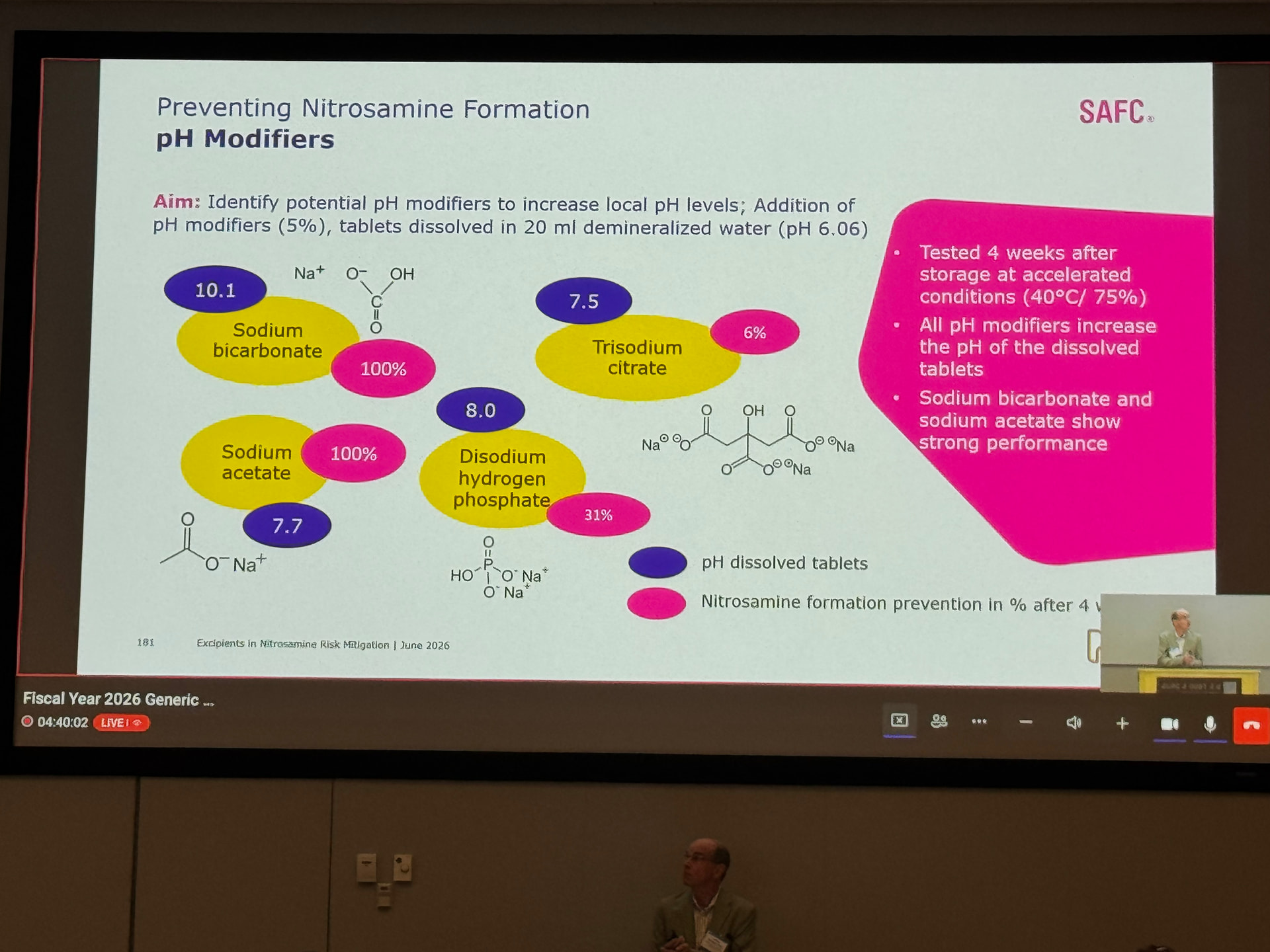
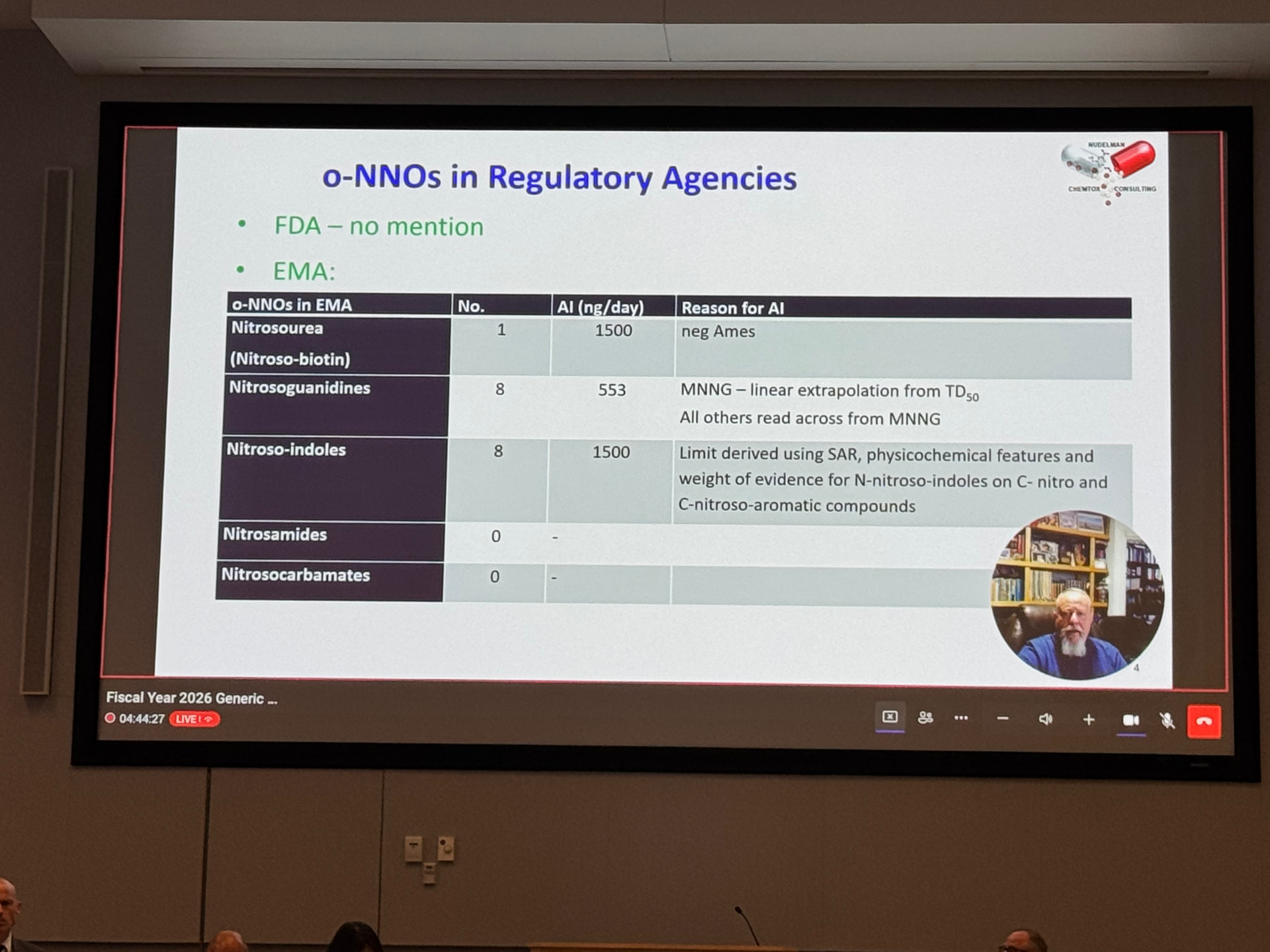
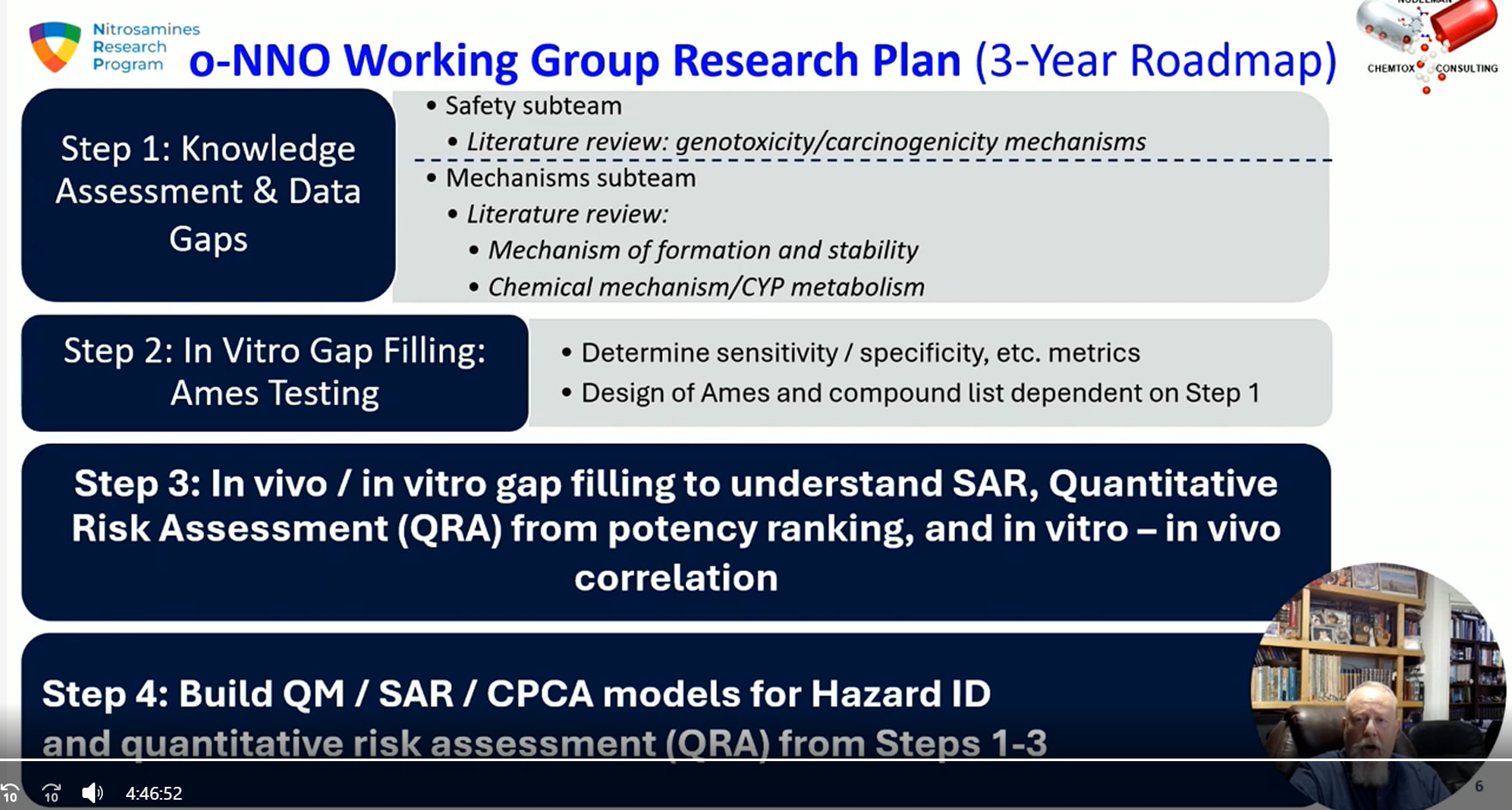
Addressing Ongoing Challenges with Impurities such as Nitrosamines
Expanding Regulatory Flexibility with Bioequivalence Approaches and Standards
Using Artificial Intelligence (AI) to Address Practical Challenges for Generic Drug Development and Regulatory Assessment
Standardizing Characterization Test Methods Supporting Bioequivalence and Product Quality
That was a really interesting note from Valerie Niddam-Hildesheim. Due to the timeline to reformulate products and prioritization, it may take 10 years to get a portfolio into compliance, leading some products to be discontinued.
I would also highlight the presentation from Dr. Flip De Bock. It clearly emphasized that the assessment needs to be performed on a case-by-case basis.
In particular, the observed nitrosamine formation at pH 9 was quite striking, as well as the level of uncertainty associated with modified-release reformulations.
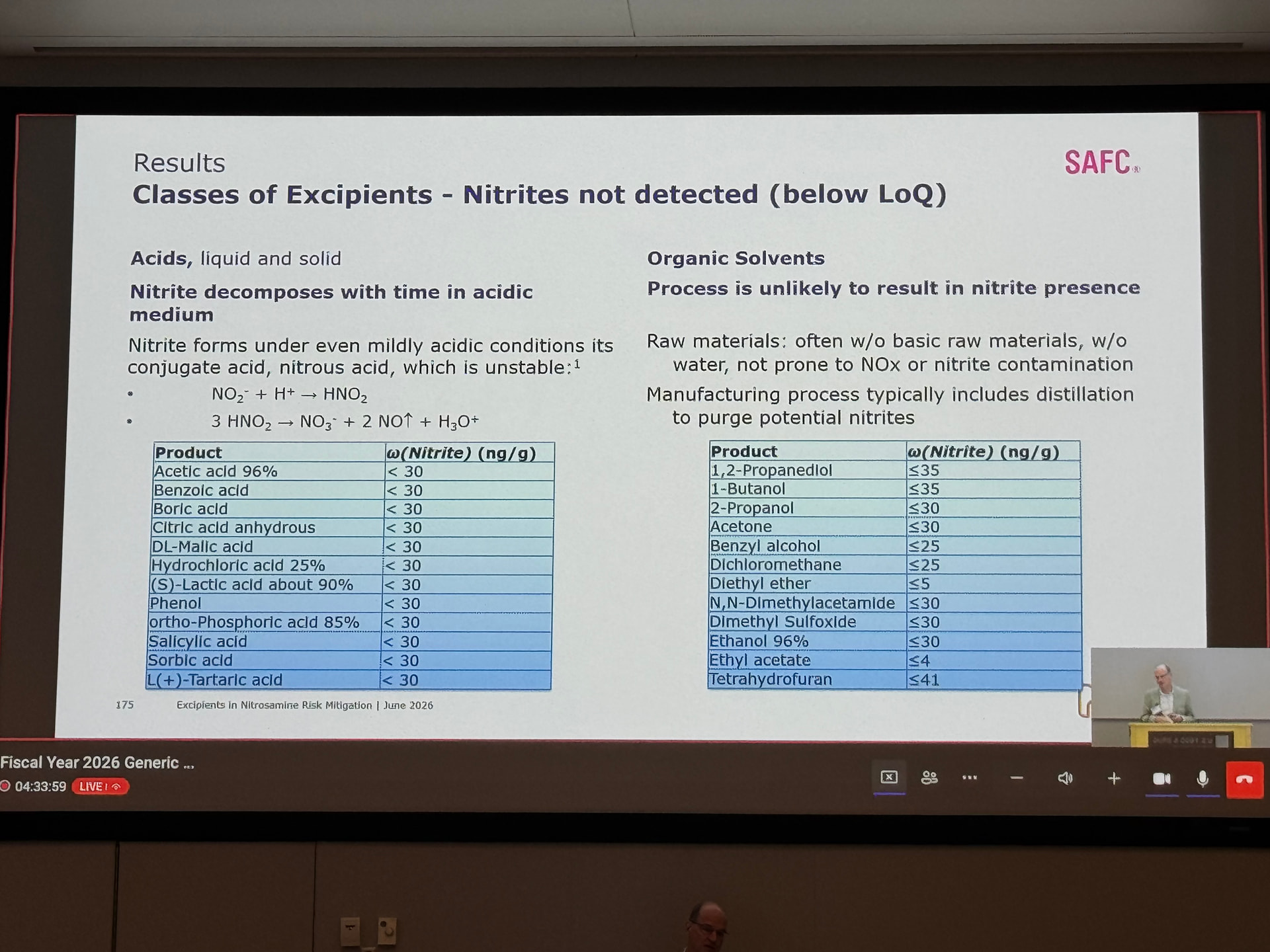
Last but not least, the reconfirmation that NOx can be a relevant contributor. I could also confirm that is the case.
These represent the next logical questions. While it is unlikely that this will evolve into a crisis comparable to that of N-nitrosamines, should it be addressed proactively, or should a clearly defined framework be established first? However, you could not have a framework without experimentation first. For me, from a purely scientific and personal perspective, it is better to over the learning curve.
It was a great honor to present on the workshop our nitroso-bisoprolol case study as an practical example how to use positive mutagenicity data for quantitative risk assessment. Additionally, a great opportunity for advocating the use of wild-type-animals, error-corrected sequencing and benchmark dose analysis as the future tools to assess mutagenicity.
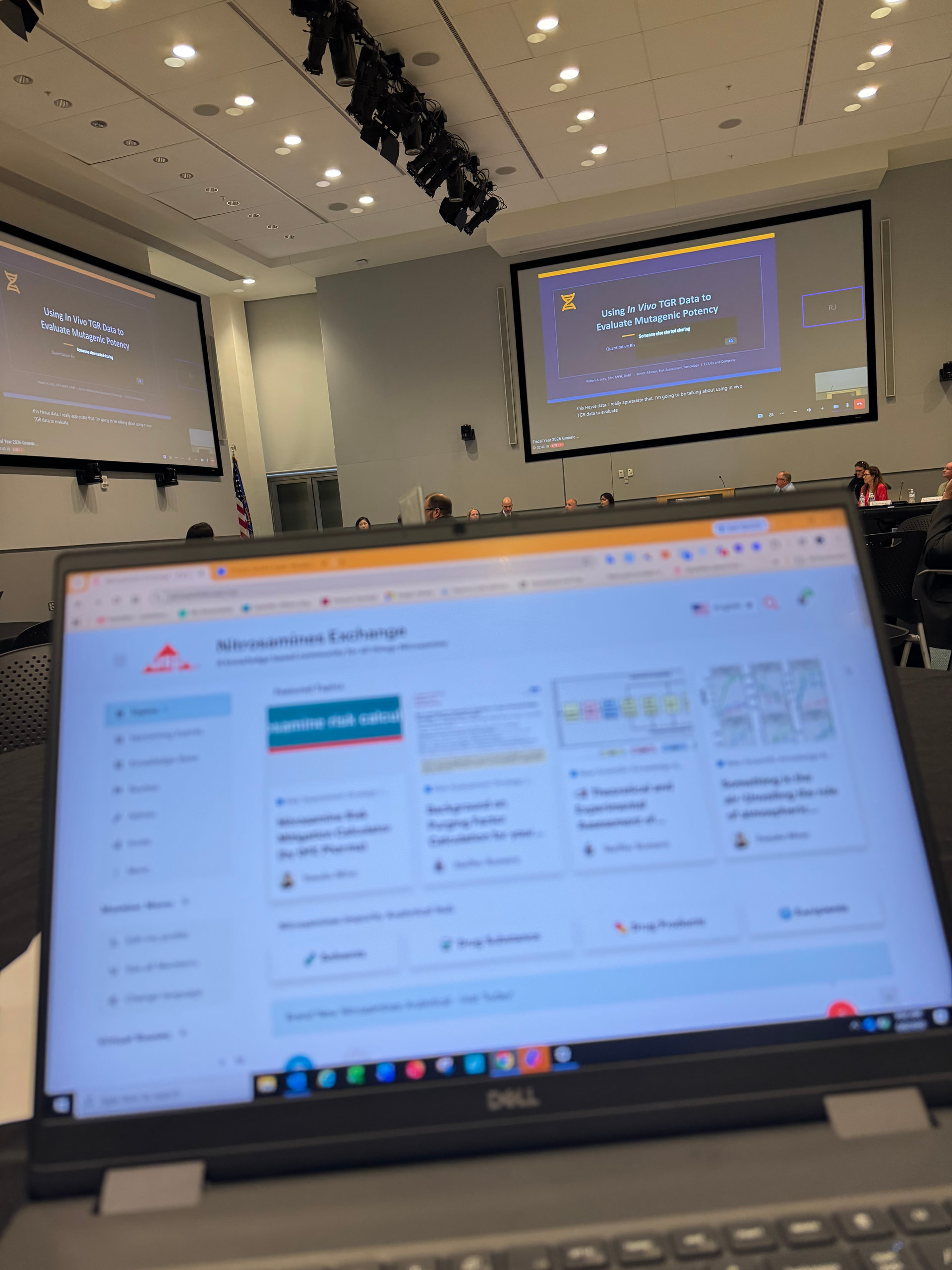
There were many great talks and also many proposals for future research were provided .
 .
.