INTRODUCTION
Nitrosamines are a significant concern in pharmaceutical products because they are classified as probable human carcinogens[2]. With regulatory agencies taking steps to address this issue, it is important for pharmaceutical companies to consider strategies for the reduction or prevention of nitrosamine drug substance-related impurities (NDSRIs). These may include selecting excipients (suppliers or batches) with lower nitrite levels or incorporating antioxidants into drug products to reduce nitrosamine formation[3].
STUDY AIM
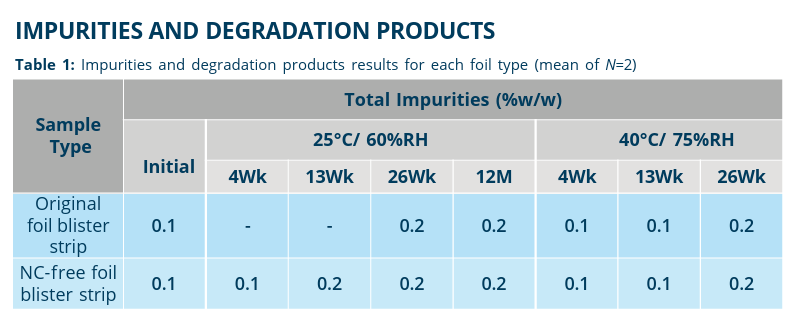
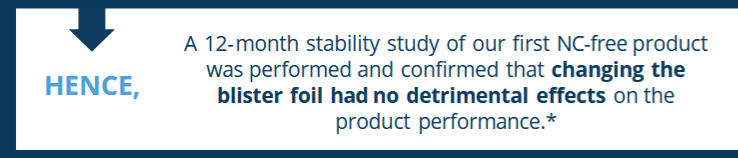
Evaluate and compare the product performance of the original foil blister strips and NC-freefoil blister strip products following manufacture, over long-term stability (25°C/60%RH) up to 24 months and accelerated stability (40°C/75%RH) up to 26 weeks.
1 Like
Hi Yosuke. First, thanks for sharing.
However, I am not sure if I understood this correctly. The impurity levels tabulated are expressed as % w/w (I assume 1%w/w = 10,000 ppm).
Nitrosamines are typically detected at ppb or ppm levels, so I wouldn’t expect them to make a significant contribution to the total impurities when expressed as % w/w. However, regulatory authorities require analytical data at very low levels, where we have observed that being NC-free can act as a mitigation factor to limit the increase of nitrosamines during storage.
Let me know for your comments.
Thank you
1 Like
Hi to all,
If I may say, the purpose of the paper seems to be around the impact to the normal QC parameters when the change to NC-free blisters is implemented. May we worth checking if a full publication comes after to understand the full scope of the investigation.
4 Likes
Hi everyone,
i will agree with Diego,
as it is written
all the parameters which are presenting in the discussion are relative with the performance of the product (dry powder inhaled most probably), like APSD stage deposition, TDD and etc.
thanks!!
Christos
2 Likes
I am wondering if sub-ppm analytical work was performed on the samples.. they seems to be monitoring as any other organic impurity.