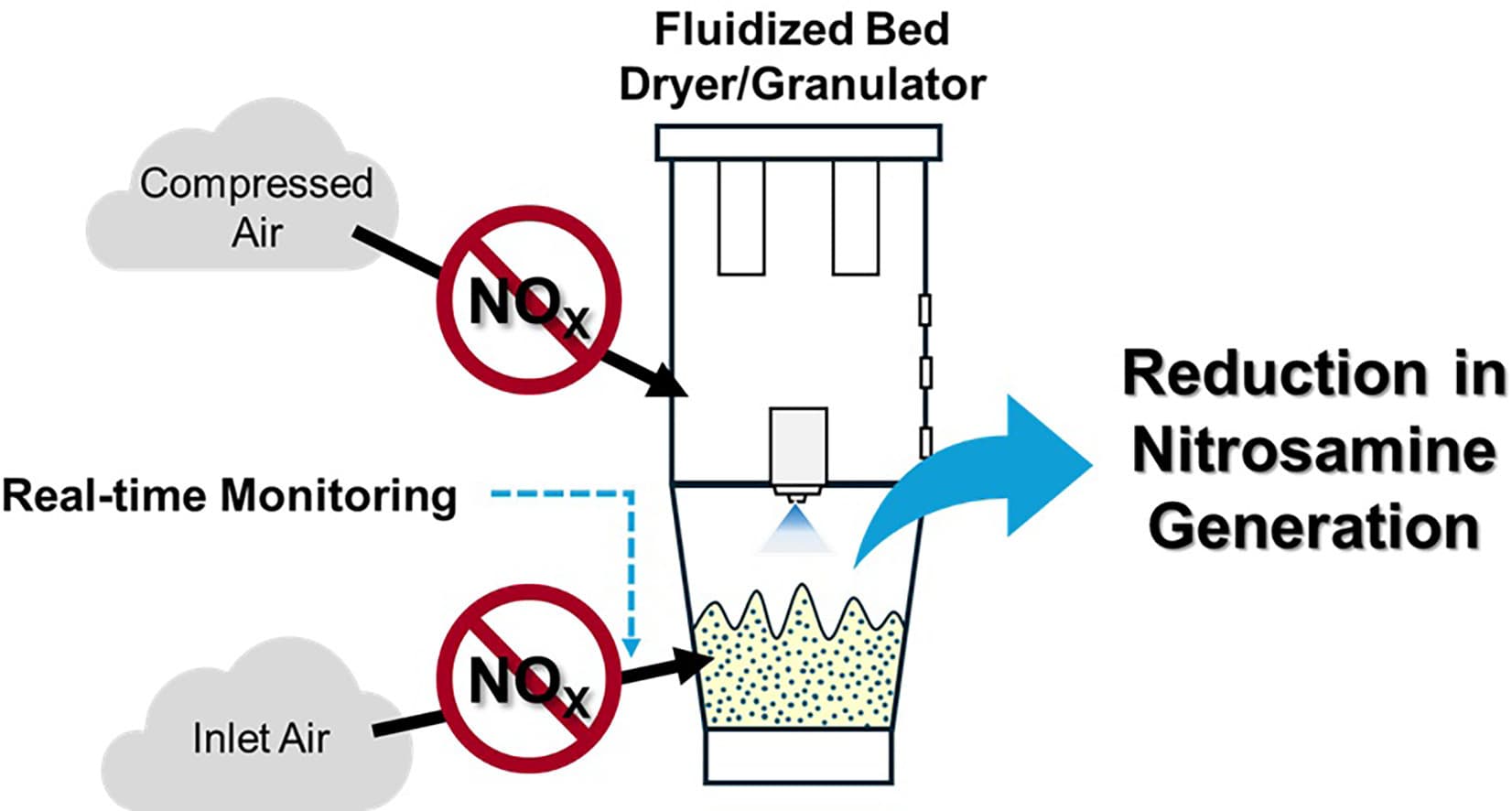
Dr. Kodama et.al have published a paper on NOx monitoring and reduction using chemical filters in pharmaceutical manufacturing equipment (fluid-bed granulators and dryers). They reported that by using appropriate filters, NOx in the inlet and compressed air can be effectively reduced, thereby lowering the amount of NDSRIs in pharmaceuticals. Very interesting!
The presence of N-nitrosamine impurities and nitrosamine drug substance-related impurities (NDSRIs) in medicines poses a significant challenge not only for manufacturers of drug substances, drug products, and excipients but also for related industries such as machinery and analytical equipment manufacturers. In addition to the ongoing identification of new NDSRIs, new causes of nitrosamine generation such as atmospheric nitrogen oxides have also been identified. These developments suggest that further discoveries in this area are likely in the future. This study is the first to demonstrate a method for verifying the behavior of nitrogen oxides during the fluidized bed drying/granulation process through real-time monitoring and to clarify their influence on the generation of NDSRIs. The influence of nitrogen oxides concentration in two air sources (inlet air and compressed air) was investigated and it was shown that the concentration can be effectively reduced by installing a suitable chemical filter. Furthermore, it was confirmed that reducing NO2 concentration during the process suppressed NDSRI generation without compromising manufacturability or the physical properties. These findings provide important insights into a previously unknown pathway of NDSRI generation and will contribute to the development of risk mitigation strategies.
There is some really interesting stuff in here, worthy of great consideration.
I found it interesting that it seems to show that there isn’t an increase in NOx present with an increase in temperature (unless I was misreading), and so moving to a lower temperature in the granulation process isn’t a way to decrease the nitrosamine formation.
I need to read it in depth, but it would be interesting if it was possible to measure the NOx levels at the point of the air intake to the fluid bed dryer and see if the correlated to the levels measured in the fluid bed dryer. This would put us back towards the position of the air having to counted as an excipient or processing aid at the very least, and applying specifications to it.
It could well explain differences observed between pilot scale and factory scale - where these 2 facilities are on different sites - different quality of input air.
A big (and expensive) job to investigate and rectify though. Could start with just some simple NOx measurements, different points in processes, and different days - hand held NOx meters look to be available. Could a direct correlation be measured??
Thank you for your comment. As you pointed out, the amount of NOx does not increase with rising temperature. However, since nitrosation reactions are accelerated by temperature, lowering the temperature is effective in decreasing the amount of nitrosamines generated, I think.
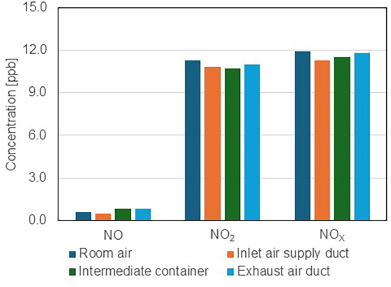
And it was also shown that there was no difference in the amount of NOx at four monitoring points inside and outside the fluidized bed dryer (room air, inlet air supply duct, intermediate container (where powder processing will take place), and exhaust air duct). Therefore, NOx control in the inlet air is justified.
The extent to which atmospheric NOx contributes to the formation of NDSRI in pharmaceuticals is believed to vary depending on the pharmaceutical. Still, it is considered effective for pharmaceuticals that require strict control, such as those with extremely low acceptable intakes.