Hello everyone,
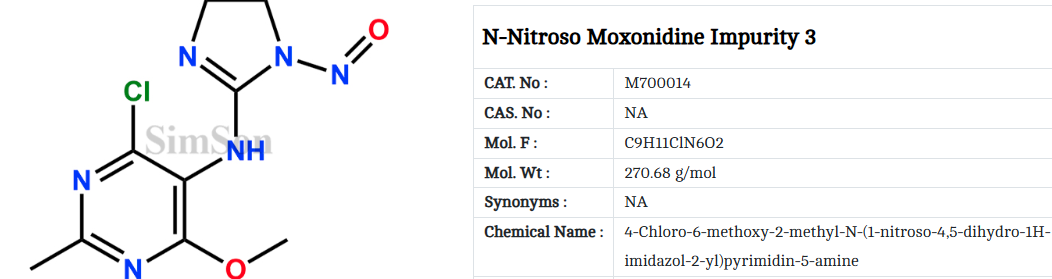
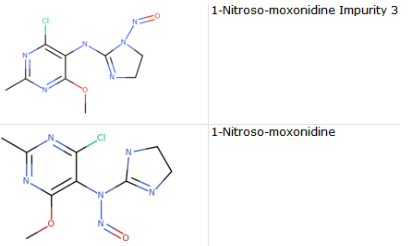
Has anyone studied “1-Nitroso-moxonidine Impurity 3” and “1-Nitroso-moxonidine”, which are listed in the EMA with both of acceptable intake value of 553 ng/day?
Thank you in advance for your answers.
Hello everyone,
Has anyone studied “1-Nitroso-moxonidine Impurity 3” and “1-Nitroso-moxonidine”, which are listed in the EMA with both of acceptable intake value of 553 ng/day?
Thank you in advance for your answers.
These impurities are very much possible and need to show its control by monitoring during process and stability.
Actually, these impurities have same mass transitions and retention time. We tried lots of columns and mobile phases (fluoro-phenyl, phenyl-hexyl, PFP column, BEH AX; acidic and basic mobile phases). We couldn’t find anything distinctive.
What would you recommend in situations like this? I’m curios about different opinions.
The best‑case scenario would be to test additional columns and find one that improves the separation. A helpful tip is to look up the purity method listed in the pharmacopoeias or your In-House Method for purity testing. The column type and eluents used there work well in most cases. If the eluents are not MS‑compatible, which is often the case , you’ll need to improvise.
If available, you could also try LC‑MS/MS with ion mobility. In this setup, identical retention times and masses are no longer an issue.
Also in the case of those impurities, i would check the COAs of the standards for additional information. Given that two vulnerable amines are present, it could be that your two standards are simply the same.
@mayank.bhanti @lucas10mauriz … any word of wizdom here?
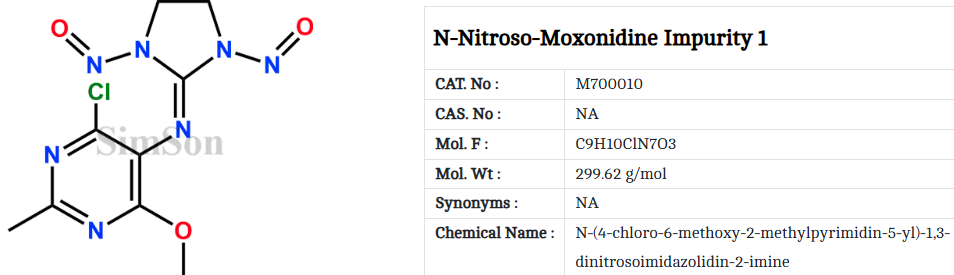
Just and idea - If the structures are as below, Impurity 1 is less probable, and it may be sufficient to test only for nitroso Impurity 3
Before answering, we are talking about these two compounds here, correct?
Before attempting another chromatographic adjustment, I’d personally step back and first look at the chemical behavior of these molecules. One aspect that always draws my attention with nitroso compounds is the restricted rotation around the N–N bond. Because this bond has partial double-bond character, different conformations may coexist in dynamic equilibrium.
In practice, chromatography may start “seeing” these conformations as slightly different populations. This often appears as peak broadening, tailing, or even an apparent coelution that becomes very difficult to resolve, regardless of column or mobile phase changes.
For this reason, before continuing the search for chromatographic selectivity, I’d recommend evaluating the effect of column temperature. Increasing temperature typically accelerates interconversion, allowing the analyte to behave as a “single” chromatographic population. In published cases, this alone significantly improves peak shape and sensitivity. I would start this evaluation using individual injections of each analyte.
Once you are confident that each compound appears as a single, well-defined peak, then I would move to the next step.
At this stage, what I usually do is acquire MS/MS spectra using a collision energy (CE) ramp, instead of relying only on optimized MRM transitions. Rather than simply checking whether the same fragments are present, I focus on comparing fragmentation ratios, meaning the relative intensity of one fragment ion compared to another as collision energy increases.
The key question I try to answer is: Do the relative fragment ion intensities change as collision energy increases? If the fragmentation ratios evolve differently between the two compounds, this suggests that distinct structures are still being observed in the gas phase, even if precursor ions and transitions appear identical. However, if the fragmentation behavior, including the relative intensities between fragments, remains essentially the same across the CE range, this may indicate that, after ionization, both compounds converge toward the same dominant gas-phase species.
I’d approach this more as a strategy to understand what the system is actually telling us, rather than as an immediate attempt to force separation.
If you are open to sharing your observations afterwards, I’d like to follow the outcome. Nitrosamines have a habit of staying one step ahead of us.