Hot off the press … a great article by FDA Team from Office of Pharmaceutical Quality, and Office of Digital Transformation
Simulation of nitrosamine drug substancerelated impurities from secondary aminerelated impurities in approved human drug products
Highlights
- Presents a comprehensive simulation to evaluate the formation risk of nitrosamine drug substance-related impurities (NDSRIs) from secondary amine related impurities in approved human drug products.
- Utilizes a risk model based on publicly available data from the FDA’s Global Substance Registration System (GSRS) to assess 446 secondary amine impurities linked to 218 APIs.
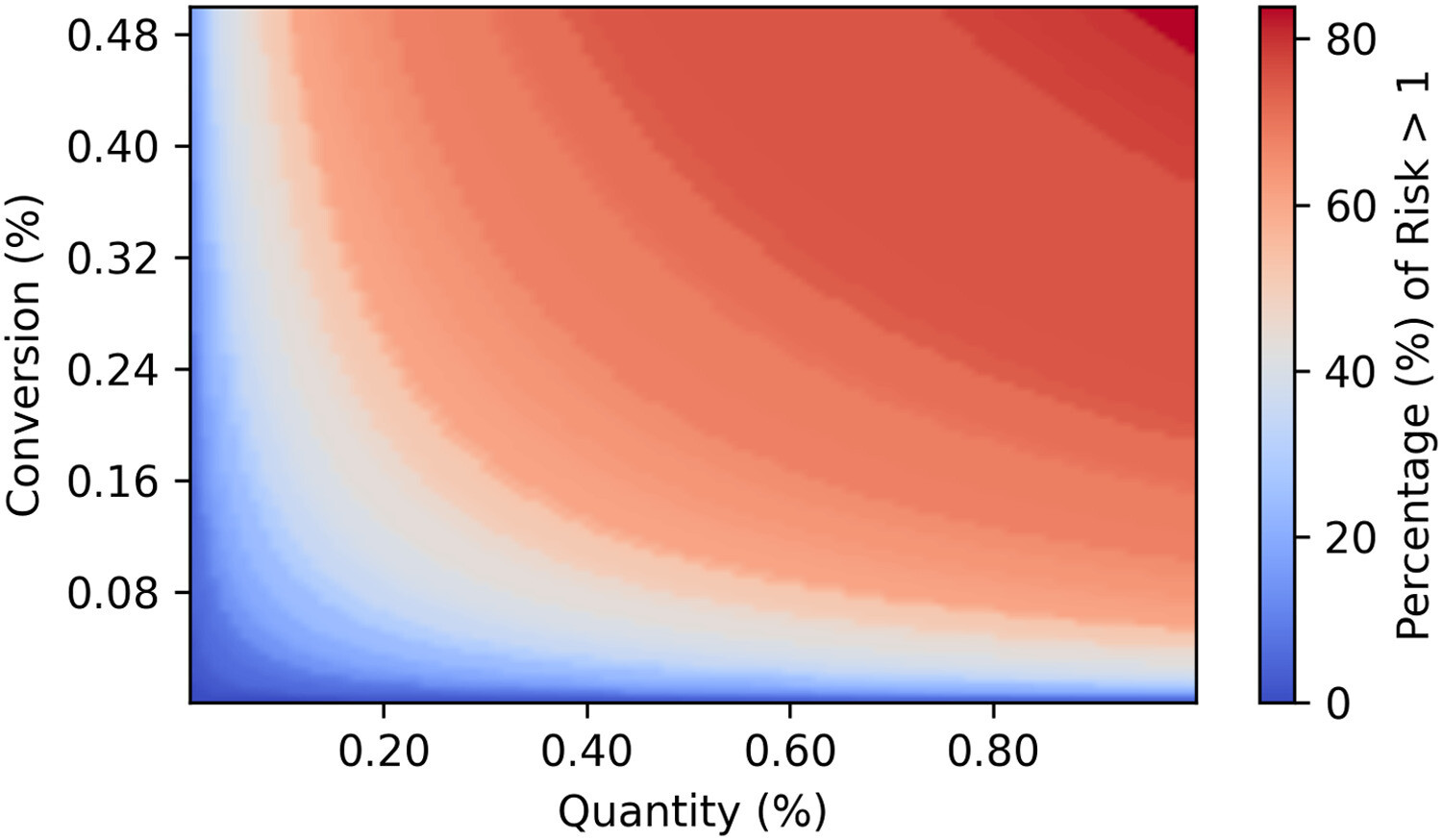
- Demonstrates that under certain conditions of impurity quantity and nitrosamine conversion ratios, a significant proportion of API fragment NDSRIs may exceed their recommended Acceptable Intake (AI) limits.
- Identifies a large number of potential NDSRIs derived from API fragments that are not currently listed in the FDA’s regulatory guidance, highlighting a previously unevaluated source of risk.
- Proposes that additional control strategies, potentially more stringent than ICH Q3A/B qualification thresholds, may be warranted to limit the presence of NDSRIs resulting from secondary amine impurities.
Abstract:
Nitrosamines, recognized as potential carcinogens, have emerged as impurities of concern in pharmaceutical products. This study evaluates the formation risk of active pharmaceutical ingredient (API) fragment nitrosamine drug substance-related impurities (NDSRIs) derived from secondary amine related impurities that may be present in human drug products throughout their shelf life. Leveraging publicly available data from the Food and Drug Administration (FDA) Global Substance Registration System (GSRS), the carcinogenic potency categorization approach (CPCA), and available maximum daily dose (MDD) information, we identified 446 secondary amine related impurities linked to 218 individual APIs in human drug products. A simulation was conducted to assess the risk of API fragment NDSRI formation from these secondary amine related impurities, incorporating factors such as impurity levels, nitrosamine conversion ratio, MDD, and acceptable intake (AI) limits. The findings reveal that, under varying conditions of secondary amine related impurity levels and nitrosamine conversion ratios, a proportion of the API fragment NDSRI impurities may exceed recommended AI limits. Based on these simulation outcomes, we propose and discuss control strategies to mitigate nitrosamine-related risks.
access: https://doi.org/10.1016/j.xphs.2026.104337
The percentage of 446 impurities with risk value greater than 1 by varying both the impurity quantity (%) and the nitrosamine conversion ratio (%)
7 Likes
This is a very interesting investigation. For me, it highlights two facts:
- The Cat. 1 limit hurts, any in-silico model in most cases shows you will be above the AL.
- Based on that, as highlighted by Ashwork et. al., in a recent investigation, even thought ICH Q3A/B levels are the easiest assumption, it may be worth developing a trace level method for the secondary amine impurity to have a more acurrate modelation. Unless the precursor is an specified degradation impurity in the DP, as a process impurity we have seen the content is not even close to the reporting threshold (your case may vary).
3 Likes
Hi all,
indeed is a very interesting paper but i still have some questions/doubts in several points.
First of all, in the formula which is being used to calculate the risk is not clearly stated the units of measurement of MDD and AI. I am supposing that MDD is in mg/day and AI is in ng/day.
If this is right, then i think that this formula needs some alterations and the molecular weights of the amine and the corresponding N-nitrosamine should be included along with a factor of 100.
Second, i have the feeling that conversion rates of 0.05% and more, are overestimated as the quantity of the nitrites is not taking under consideration.
For example, lets say that an impurity (secondary amine) is presented at level of 0.1% or 1000ppm in a common tablet. As the quantity of the nitrites which is usually presented in a tablet is usually 1-2ppm, a conversion rate of 0.05% of the impurity means that 0.5ppm of the amine have reacted with 0.05ppm of nitrites or 25-50% of the available nitrites in the formulation. This number is considering too high for an impurity case, knowing that such conversions are usually recorded when the API itself is a secondary amine. I believe that not more than 1% of the nitrites would react with the amine to form the corresponding nitrosamine mainly due to its very low abundance in the tablet. This means that the maximum quantity of the impurity which would react would not be more than 0.05-0.1ppm which corresponds to 0.005-0.01% conversion rate.
Last but not least, there is no mention to the cases when the API itself is a secondary amine. In those cases, the conversion factors of any secondary amine type-impurity are anticipated decreased significantly, as the majority of the nitrites are ‘‘trapped’’ from the most abundant amine in the formulation which is the API.
thanks
Christos
4 Likes
I completely agree, @chrischar . My basic thought has been that most of these impurities will be similar in structure to the API. Surely, many won’t be, but let’s work from there. As long as that similarity holds surrounding the vulnerable amine itself, one should expect a similar reaction rate to the API itself. In which case, an impurity at a level of 0.1% will only add 0.1% to the total nitrosamine load currently found.
Another way of looking at this is that if our current NDSRIs were converting at rates of 0.05% (500ppm), we would frequently see similar results with our current drug products.
When FDA shared this at a conference last year, I thought it really needed some work & I’m still there.
My bigger concern, though, is the lack of enforcement of current standards. The gap in companies that are actively trying and not is significant. Efforts like this, while warranted and valuable, widen that gap when we need to shrink it and the only way to drive compliance is enforcement.
4 Likes
thank you Jason!!
Our experience (speaking for typical tablets or caps) have shown that when the API is a secondary amine, it absorbs nearly all the available nitrites in the formulation and this influence not only the impurities with a relative structure but also and impurities with totally different chemical reactivity. In three cases which we have tested for the nitrosamine of impurities which are secondary amines and considering very vulnerable to nitrosation in presence of an API which is also a secondary amine, we had received results at levels of LoQ (10% of the AI) and less (most of them were ‘‘not detected’’).
best regards
Christos
3 Likes