The Future of Bio/Pharmaceutical Analysis 2026 - Nitrosamines

The Future of Bio/Pharmaceutical Analysis 2026

The Future of Bio/Pharmaceutical Analysis Virtual Summit returns on 23, 24 and 25 June 2026 for three days of expert-led debate on the issues defining the next era of pharma. Across nine panel sessions, the agenda moves from the lab floor to the regulatory front line and on to the AI-enabled facilities reshaping the industry.

This year’s programme spans the modernisation of environmental monitoring for advanced therapies, the shift to sustainable, non-animal endotoxin testing, state-of-the-art contamination control, evolving nitrosamine requirements, reference standards in the GLP-1 era, US and European regulatory change, and the digital, AI and automation technologies redrawing the biopharma manufacturing map.

Day 1 — Tuesday 23 June: rethinking QA/QC

The summit opens with a deep dive into environmental monitoring, where Dr. Michael J. Miller, President of Microbiology Consultants, LLC, sets out how traditional EM practices must adapt to keep pace with biologics, cell and gene therapies. Session two turns to endotoxin testing and the practicalities of switching to non-animal reagents without compromising on speed, cost or compliance. The day closes with contamination control, where Vanessa Vasadi Figueroa (VVF Science), Mark Hallworth (Particle Measuring Systems) and Hayden Skalski (Veolia) examine cleanroom design, post-shutdown risk and detection of challenging contaminants.

Day 2 — Wednesday 24 June: navigating regulatory change

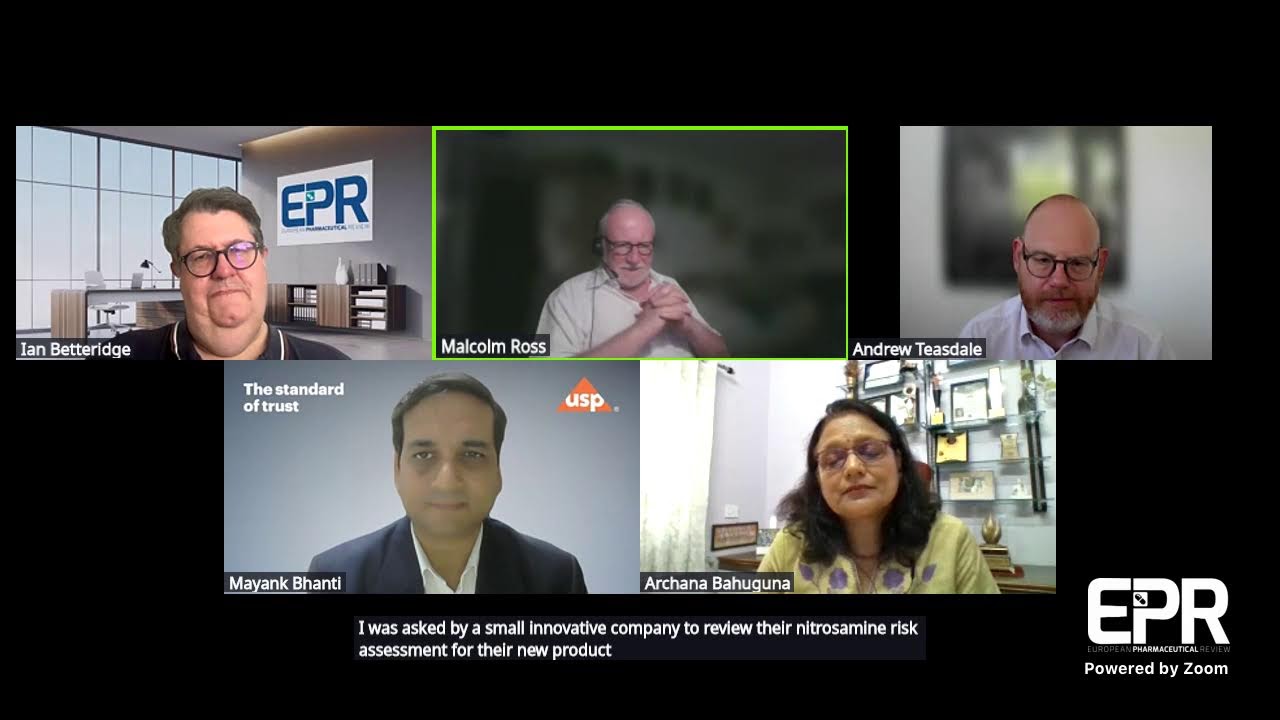
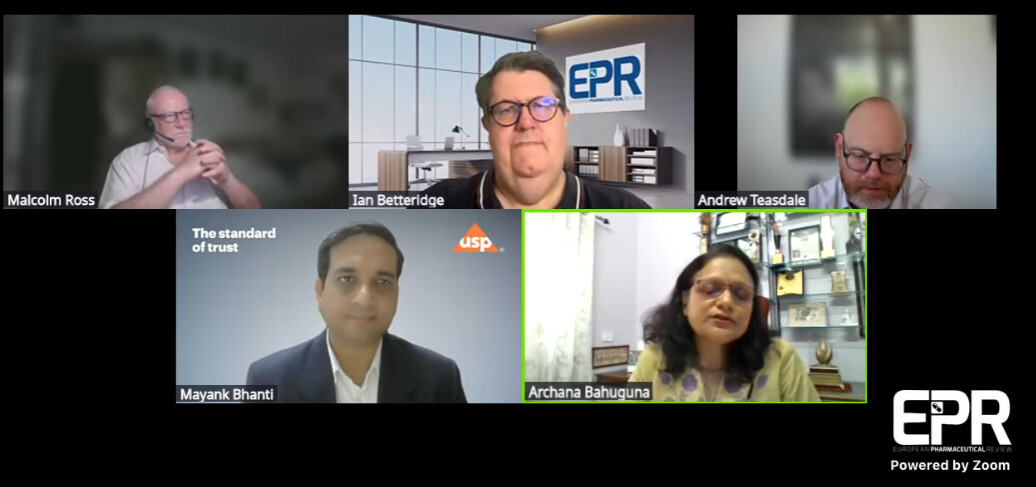
Day two opens with the long-running nitrosamine challenge. Andrew Teasdale (ATCMC Solutions), Malcolm Rossi (Novartis Nitrosamine Task Force), Dr. Archana Bahuguna and Mayank Bhanti, Senior Director at USP, unpack the latest FDA testing deadlines, NDSRI control strategies and how to staff cross-functional teams for success. Attention then shifts to quality control and reference standards in the GLP-1 era, before a closing session on regulatory disruption — covering the next generation of FDA user fee agreements and Europe’s drive to sharpen its competitive edge.

Day 3 — Thursday 25 June: digital, AI and automation

The final day spotlights pharma’s digital transformation. Doris Lacej (Profarma sha), Dr. Raminderpal Singh, Global Head of AI and GenAI Practice at 20/15 Visioneers, and Professor Ziyaur Rahman (Texas A&M University) open with strategic approaches to digitalisation across the manufacturing value chain. Session two, featuring Dr. Sulaf Assi (Liverpool John Moores University) and Professor Vasiliki Kalodimou (Iaso), looks at where AI is already moving the needle on yield analytics and reliability. The summit closes with a session on robotics and the journey towards ‘lights-out’ manufacturing facilities.
Register here: https://pharmaceutical.events/future-bio-pharma-analysis-2026/register/?zcs=EPR_Editorial_Register_TFBPA26&campaign_source=EPR_Editorial_Register_TFBPA26

3 Likes

That was a truly excellent discussion. The nitrosamine issue is far from over, and pharmaceutical companies are still struggling with many challenges. It is definitely worth watching to gain insight into what lies ahead.

3 Likes

I hope you did not miss the Nitrosamines session this morning…

Recording available in Youtube: https://www.youtube.com/watch?v=uoVEHQCkshY

It was wonderful to hear updates from @GENERAPHARM @mayank.bhanti @AndyT @DAB

… (Nitrosamines) “This was one x%^$# company messing around with his process, and one &$%# agency over reacting. Boy! was I wrong!”… Malcolm, I couldn’t say it any better!

Key take aways for me:
Analytical Challenges: Significant Gaps Remain
The panel was candid that while methods have improved substantially, important weaknesses persist:

  • Recovery validation using liquid spiking does not reflect true recovery from solid matrices — artificially contaminated solid samples are needed for meaningful results
  • Analytical error at ppb levels is large enough to cast genuine doubt on results, particularly in root cause investigations; distinguishing a real signal from noise is a daily challenge
  • Stability complexity means results at time zero tell you very little; meaningful kinetic data may require six to twelve months of monitoring before signals emerge above the level of analytical error
  • Chromatographic separation is inherently difficult given the structural similarity between NDSRIs and the parent API
  • Mass spectrometry brings its own complications: isotope interference in high-resolution MS can confuse quantitative and qualitative ion assignment
  • Ultrasonic baths generate nitrite in an uncontrollable way and must not be used in sample preparation — a point the panel noted is still being ignored in published literature

Compliance Failures

Archana Bahuguna identified the most common causes of regulatory failure:

  1. Inadequate risk assessment — no assignable root cause for NDSRI formation, including failures attributable to nitrite-containing excipients or recycled solvents
  2. Poor excipient control — insufficient vendor qualification and incoming material testing for nitrite levels
  3. Weak analytical methods — insufficient sensitivity or specificity, or methods that are not properly validated for the matrix in question
  4. Packaging — migration of nitrite from printing inks into primary packaging, often under-investigated
  5. Cleaning validation — inadequate procedures allowing precursor or nitrosating agent carryover between batches; the panel noted FDA 483s have been issued on exactly this point
  6. Organisational gaps — inadequate training of personnel conducting confirmatory testing, and a tendency to treat nitrosamine compliance as a one-time submission exercise rather than a product lifecycle responsibility
8 Likes

Thanks for summarising the key takeaways Naiffer. The community members were in action LIVE at the EPR forum. I also emphasized on OOS aspects, stability failures during my talk.

4 Likes

Thanks for sharing the feedback @Yosukemino

1 Like